
Why Morning Stiffness Seems To Last Longer Now
You get out of bed.
And for the first few steps, your body doesn’t quite feel ready yet.
Not painful exactly.
Just stiff.
Slow.
Like everything needs a few extra minutes before it starts working the way it should.
At first, most people don’t think much about it.
You move around.
And eventually things loosen up.
So it’s easy to assume it’s nothing.
Just another part of getting older.
But then something interesting starts happening.
The stiffness seems to stay a little longer.
A few minutes becomes ten.
Ten becomes twenty.
And before long, you start noticing that your body doesn’t always feel ready when your day begins.

For many adults, that’s when the questions begin.
Why mornings?
And why does it seem to take longer to get moving than it used to?
What makes this frustrating is that the change often happens so gradually.
You don’t wake up one day and suddenly notice it.
Instead, it appears little by little.
Small enough to ignore.
Until it becomes part of your routine.

Researchers have spent years studying why movement and comfort can change over time.
And some of their findings have surprised many people.
Because in many cases, what people notice first isn’t discomfort itself.
It’s stiffness.
A feeling that movement takes more effort than it used to.
A feeling that the body needs more time to warm up.
Long before most people understand why.
That’s one reason so many adults spend years focusing on the feeling…
Without ever learning what may be happening underneath.
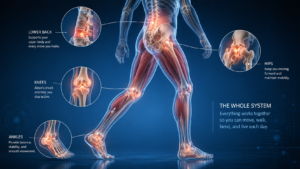
The part most people don’t realize is that morning stiffness isn’t only about mornings.
It’s often one of the first moments people notice because mornings remove the distractions.
No distractions.
Just those first few steps.
And that’s when subtle changes can become easier to notice.
The frustrating part is that these changes rarely stay limited to the first minutes of the day.
Over time, they may begin showing up elsewhere too.
Getting out of a chair.
Walking.
Taking stairs.
Not all at once.
Just gradually.
One small adjustment at a time.
Until many people find themselves wondering when movement stopped feeling effortless.
That’s often when a different question begins to matter.
Not:
“How do I get through today?”
But:
“Why is this happening in the first place?”
Because what if morning stiffness isn’t the problem?
What if it’s simply one of the first signals that something deeper may be changing inside the joint?
Fortunately, researchers have uncovered discoveries that are helping many adults better understand movement and mobility as they age.
For many people, those discoveries explain far more than they expected.
See What May Be Changing Inside