
The Small Signs Many Adults Notice Before Mobility Starts Declining
Most people don’t notice mobility changing all at once.
It usually starts smaller than that.
A slower first step.
A hand reaching for the railing.
A little hesitation before standing up.
A shorter walk than usual.
Nothing dramatic.
Nothing that seems important at the time.
Just small moments that are easy to explain away.
A busy week.
A long day.
Getting older.
And for a while, those explanations seem reasonable.
Until the same little signs keep showing up.

That’s when many people begin noticing something strange.
None of these moments feel connected.
The stairs seem unrelated.
The morning stiffness seems unrelated.
The shorter walks seem unrelated.
The knees seem unrelated.
Yet over time, many adults start experiencing more than one of them.
And that’s usually when curiosity begins.
Because what if these aren’t separate problems at all?
What if they’re part of the same pattern?
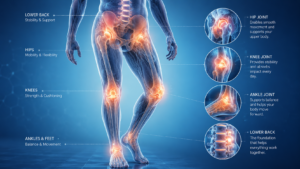
Researchers have spent years studying how movement changes over time.
And some of their findings have surprised many people.
Because mobility rarely disappears overnight.
Instead, the body often provides small signals first.
Signals that are easy to overlook.
Easy to dismiss.
Easy to adapt around.
Long before most people understand what may be changing underneath.
That’s one reason so many adults focus on individual symptoms…
Without ever seeing the larger picture.
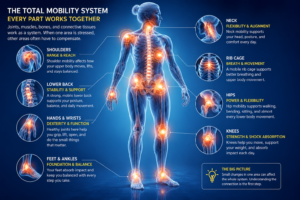
The challenging part is that adaptation happens quietly.
People take a different route.
Skip a few stairs.
Sit a little more often.
Walk a little less far.
Not because they want to.
But because it feels easier.
And after a while, those adjustments become normal.
That’s why many adults never notice the pattern while it’s happening.
They only notice it later.
When activities that once felt automatic begin requiring a little more thought.
A little more effort.
A little more planning.
That’s often when an important question finally appears.
Not:
“How do I deal with this today?”
But:
“What has been changing all this time?”
Because what if those small signs weren’t random?
What if they were clues?
Pieces of a larger picture that most people never learn about until years later?
Fortunately, researchers have recently uncovered discoveries that are helping many adults better understand movement, flexibility, and mobility as they age.
And for many people, those discoveries explain far more than they expected.