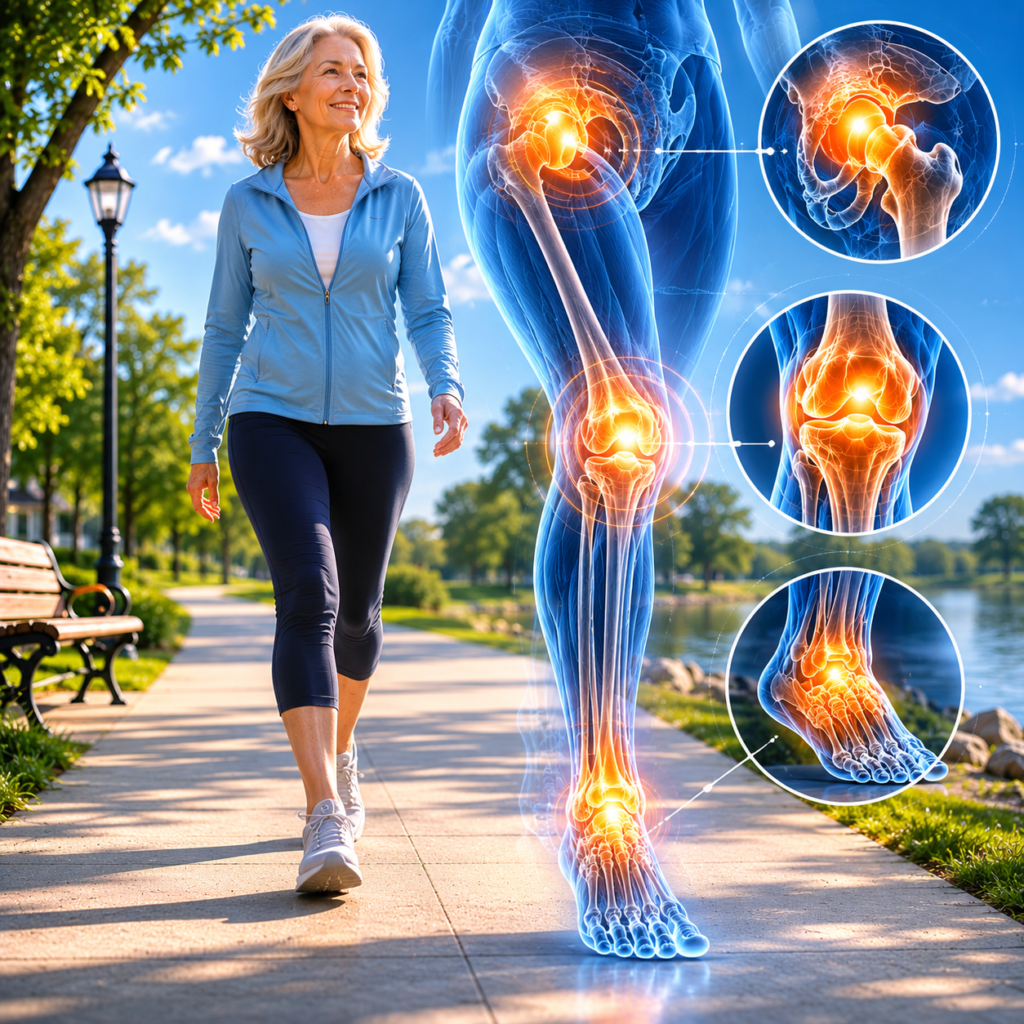
Why Walking Feels Less Comfortable Over Time
You still walk.
You still go where you need to go.
You still run errands.
Visit family.
Go shopping.
Take trips.
Do all the normal things you’ve always done.
But if you’re being honest…
Walking doesn’t feel quite the same as it used to.
Not dramatically.
Not every day.
Just enough to notice.
Maybe you walk a little slower.
Maybe longer distances seem less appealing.
Maybe you find yourself looking for places to sit more often than before.
At first, most people don’t think much about it.
After all, getting older is part of life.
Right?
But then the pattern keeps showing up.
And eventually, a simple question starts forming in the back of your mind:
Why does something that once felt effortless now seem to require more attention?

What makes it confusing is that the distance hasn’t changed.
The sidewalk hasn’t changed.
The route hasn’t changed.
Yet somehow, the experience feels different.
That’s what many adults find difficult to explain.
Because the change rarely happens overnight.
It often develops so gradually that most people don’t notice it until everyday activities begin revealing it.
Walking.
Standing.
Climbing stairs.
Getting up after sitting.
Small moments that suddenly feel different than they once did.

Researchers have spent years studying why comfortable movement often changes with age.
And some of what they’ve discovered has surprised many people.
Because in many cases, the real story may begin long before walking ever feels different.
Long before most people realize something may be changing underneath the surface.
That’s one reason so many adults spend years focusing only on what they feel.
Without ever learning what may actually be driving those changes.
One of the most frustrating parts is that many people still want to stay active.
They still want to travel.
Explore new places.
Take walks with family.
Enjoy retirement.
Stay independent.
Yet subtle changes in movement can slowly influence everyday decisions.
Taking shorter walks.
Turning down activities.
Choosing easier routes.
Wondering whether certain outings will feel worth the effort.
Not because they want to.
But because something no longer feels quite as comfortable as it once did.
And that’s when many people begin asking a different question.
What if walking isn’t actually the problem?
What if walking is simply one of the first places where a deeper change becomes noticeable?
A change that most people never hear about until years later.
Fortunately, researchers have recently uncovered discoveries that are helping many adults better understand mobility, joint function, and comfortable movement.
And for many people, those discoveries explain far more than they expected.
Discover What Researchers Found